How to Build a Daily Meditation Ritual: A Simple 5-Minute Practice for Beginners

Creating small moments of calm in everyday life
We’ve all been there.
A new month begins, a new year arrives, or life simply starts to feel overwhelming. We decide that something needs to change. We want more calm, more clarity, and more balance.
Maybe we imagine waking up early every morning, sitting peacefully for thirty minutes, and becoming a completely different person overnight.
But real change rarely happens that way.
Building a daily meditation ritual is not about making a dramatic lifestyle transformation. It is about creating a small, meaningful moment each day where you can slow down, reconnect with yourself, and return to the present.
A meditation practice does not need to be complicated. It can be five quiet minutes while your morning coffee brews, a peaceful pause after work, or a gentle evening ritual before sleep.
The most important thing is not perfection. It is consistency.
A few mindful minutes repeated every day can gradually become a natural part of your life.
In this guide, we’ll explore how to start a meditation habit, create a peaceful meditation space at home, and build a simple daily ritual that feels natural and sustainable.
1. Start Small: Build a Meditation Habit That Lasts
One of the biggest mistakes beginners make when starting meditation is trying to do too much too quickly.
You might tell yourself:
"Starting tomorrow, I will meditate for 45 minutes every morning."
At first, the motivation feels powerful. The first few days may even feel inspiring.
But when work becomes busy, responsibilities increase, or life becomes unpredictable, a large commitment can quickly become difficult to maintain.
According to B.J. Fogg, a Stanford University researcher and author of Tiny Habits, lasting behavioural change comes from starting small. Big goals often require a level of motivation that is difficult to maintain, while small actions are easier to repeat and turn into habits.
When creating a daily meditation ritual, begin with something achievable:
- Five minutes a day.
- Ten minutes if it feels comfortable.
- Even a few mindful breaths can be a beginning.
The goal at first is not to empty your mind or achieve perfect concentration.
The goal is simply to show up.
A small daily practice creates familiarity. Over time, meditation becomes less like a task you need to complete and more like a natural part of your everyday rhythm.
Think of it like caring for a garden. A little attention every day allows something meaningful to grow.
2. Choose Consistency Over Longer Meditation Sessions
Many new meditators believe that longer meditation automatically means better results.
But when you are building a new meditation practice, consistency is far more important than duration.
Five minutes of mindfulness every day can create a stronger foundation than a long meditation session once a month.
During a short daily practice, you can learn to:
- Notice your breathing.
- Become aware of your thoughts without judgement.
- Release physical tension.
- Return your attention to the present moment.
Your mind develops through repetition, just like your body develops through regular exercise.
Some habits may begin forming after a few weeks. For others, it may take several months. The timeline is different for everyone.
What matters is continuing to return to your practice.
If you miss a day, there is no need to feel discouraged. Simply begin again.
Every moment you choose to sit is another step towards creating a calmer and more mindful life.
3. Create a Peaceful Meditation Space at Home

Your environment has a powerful influence on your emotions and attention.
A dedicated meditation space does not need to be a large room or a perfectly designed corner. Even a small area in your bedroom, living room, or quiet corner of your home can become a place for mindfulness.
The purpose is not decoration.
It is intention.
When you return to the same space each day, your mind gradually begins to associate that place with calm, comfort, and presence.
You can create a simple meditation corner with:
- A comfortable cushion or chair.
- Natural materials such as wood, stone, or linen.
- Soft lighting.
- A plant or meaningful object.
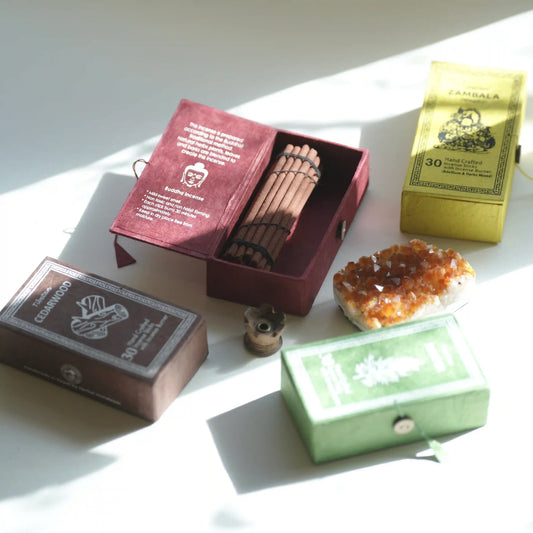
- A candle or natural incense.
These simple elements can become gentle reminders that it is time to slow down.
At SINGOAU, we believe the objects we surround ourselves with every day can quietly shape how we feel. Natural materials, handmade pieces, and meaningful objects can transform ordinary moments into mindful rituals.
4. Use Incense and Natural Objects as Ritual Anchors
Throughout history, people have used scent, light, and natural materials to mark moments of reflection and connection.
A simple ritual can help signal a transition from one part of life to another.
Lighting incense before meditation is one example.
The gentle movement of smoke, the natural fragrance, and the quiet process of preparing your space can become a reminder:
Work is finished.
The phone can be put aside.
The mind can begin to slow down.
A natural incense ritual can help create a peaceful atmosphere for meditation, journaling, reading, or simply enjoying a quiet moment alone.
Explore our Natural Incense Collection to discover botanical scents designed for mindful living.
5. Find a Comfortable Meditation Position
There is no perfect meditation posture.
You do not need to sit cross-legged on the floor like a traditional meditation image. The most important thing is that your body feels comfortable and supported.
You can meditate:
- Sitting on a chair with your feet resting naturally on the floor.
- Sitting on a cushion or meditation block.
- Lying comfortably on your back.
A comfortable posture allows your attention to focus inward instead of being distracted by physical discomfort.
Some beginners experience stiffness or restlessness when they first start sitting quietly. This is completely normal.
Allow your body time to adjust.
Meditation is not about forcing yourself into a certain position. It is about creating a space where you can feel present and relaxed.
6. Attach Meditation to an Existing Daily Habit
One of the easiest ways to build a meditation habit is to connect it with something you already do every day.
Your life is already filled with routines:
- Brushing your teeth.
- Making coffee.
- Taking a shower.
- Finishing work.
- Preparing for sleep.
Instead of finding a completely new time for meditation, attach it to an existing habit.
For example:
Morning routine
Wake up → drink water → meditate for five minutes.
Coffee ritual
Prepare your coffee → sit quietly while it brews → practice mindful breathing.
Evening ritual
Finish work → light incense → enjoy a few peaceful moments before bedtime.
This method works because your brain already remembers the existing routine. The new meditation practice becomes naturally connected to something familiar.
7. Make Your Meditation Practice Rewarding
A habit becomes stronger when it feels meaningful.
After completing your meditation, take a moment to acknowledge yourself.
You can create a small reward by:
- Enjoying a warm cup of tea or coffee.
- Writing a few thoughts in a journal.
- Tracking your meditation journey.
- Sharing the practice with a friend.
These small moments of appreciation help your brain recognise that meditation is something positive.
Over time, the reward becomes the feeling itself:
A calmer mind.
A clearer perspective.
A deeper connection with yourself.
Every time you sit in meditation, you are creating a new relationship with your thoughts, emotions, and the world around you.
A Simple 5-Minute Meditation Ritual for Beginners
If you are wondering how to start meditation today, try this simple practice.
Minute 1: Arrive
Sit comfortably. Close your eyes. Take several slow breaths. Allow yourself to arrive in the present moment.
Minutes 2–4: Observe
Bring your attention to your breathing. Notice each inhale and exhale. When your mind wanders, gently return your attention without judgement.
This is the practice.
Minute 5: Appreciate
Slowly open your eyes. Take a moment to appreciate that you created space for yourself today. Small moments create lasting change.
Final Thoughts: Creating Space for Mindful Living

Building a daily meditation ritual is not about becoming a different person overnight.
It is about creating small moments where you can reconnect with yourself.
Start with five minutes. Create a peaceful space. Choose objects that bring meaning into your environment.
Let your practice grow naturally.
Over time, these small moments can become something much deeper — a daily reminder to slow down, breathe, and appreciate the beauty of the present.
At SINGOAU, we believe mindful living begins with simple choices. The objects around us, the spaces we create, and the rituals we practice can quietly influence how we experience everyday life.
Sometimes the smallest moments create the greatest changes.
Frequently Asked Questions
How long should beginners meditate each day?
For beginners, five to ten minutes per day is a great starting point. A short daily meditation practice is often more effective than occasional longer sessions because consistency helps create a lasting habit.
What is the best time of day to meditate?
The best time is the time you can maintain consistently. Many people enjoy morning meditation because the mind is usually quieter, while others prefer evening meditation as a way to release the stress of the day.
How can I create a meditation space at home?
Choose a quiet corner and add simple elements that make you feel comfortable and grounded, such as a cushion, natural materials, soft lighting, plants, candles, or incense.
Can incense be used during meditation?
Yes. Many people use incense as part of a mindfulness ritual because scent can create a sensory connection between everyday activities and moments of calm.
Do I need meditation experience to start?
No. Meditation is simply the practice of becoming aware of the present moment. Anyone can begin with a few quiet breaths.